
Aviator on Pin-Up: Rules, Auto Cash-Out, Odds
Aviator is the single most searched game on Pin-Up — a round that lasts seconds, one button to learn, and a payout curve that resets every time. Here's exactly how it works.
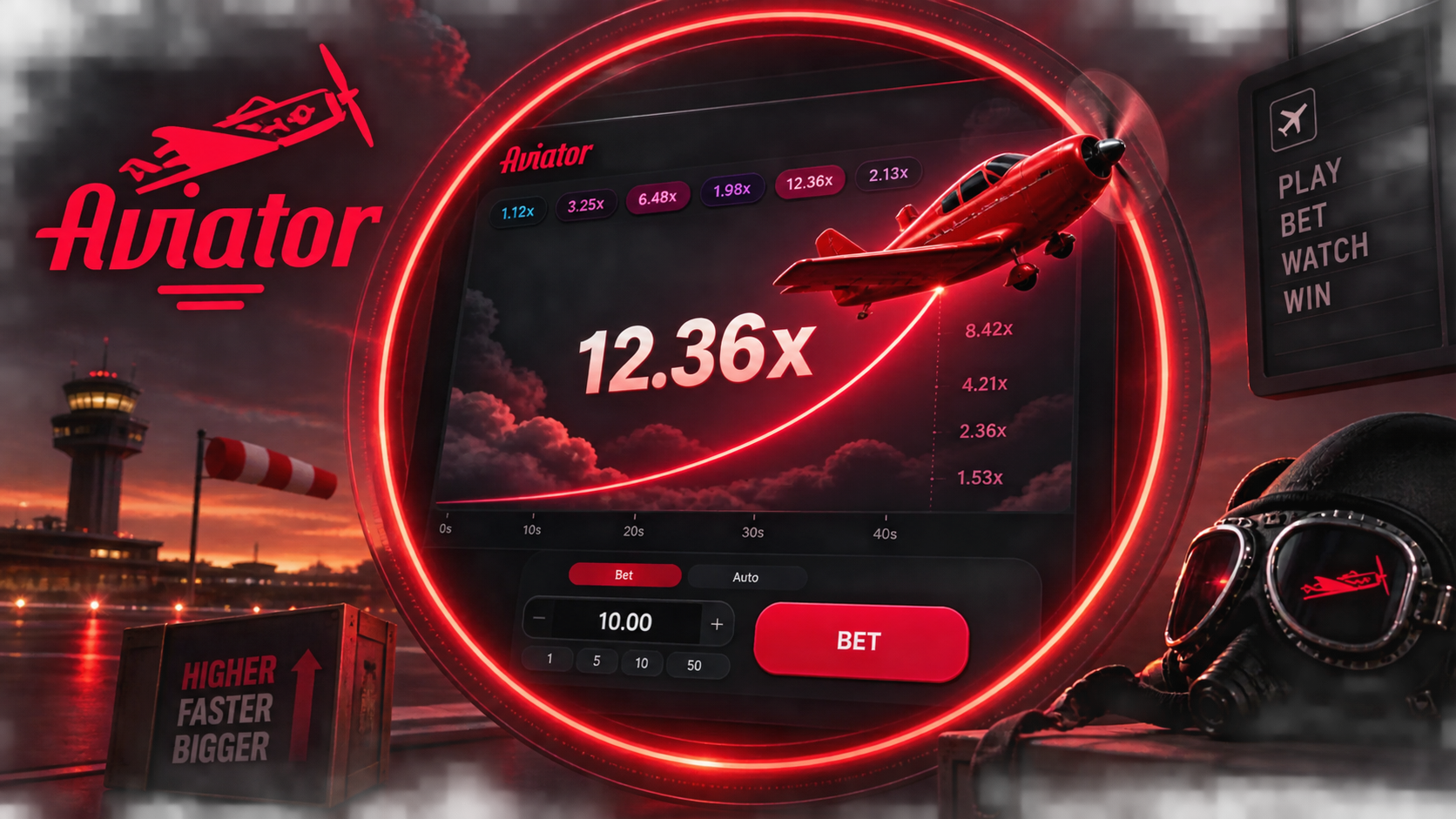
How a round works
- Place your bet before the round starts (up to two bets per round).
- Watch the multiplier climb from 1.00x as the animated plane ascends.
- Press "Cash Out" at any point to lock in the current multiplier as your payout.
- If you don't cash out before the plane flies away, that bet is lost — the round resets instantly.
Reading the interface
| Element | What it shows |
|---|---|
| Multiplier counter | Live value climbing from 1.00x during the round |
| Round history bar | Recent crash points — context only, not a predictor |
| Bet panel (x2) | Two independent stakes, each with its own cash-out |
| Auto cash-out field | Target multiplier that triggers an automatic payout |
| Live bet feed | Other players' stakes and cash-outs in the same round |
Auto cash-out vs. manual
Auto cash-out
- Fixed target, no reaction time needed
- Removes emotion from fast rounds
- Useful for consistent, repeatable stakes
Manual cash-out
- Full control over when to exit
- Can chase a higher multiplier mid-round
- Needs full attention during the round
Provably fair, in plain terms
Spribe publishes a verification method for Aviator: each round's outcome is derived from a hashed seed that can be checked after the fact against the published algorithm. That doesn't change the odds of any given round — it means the result wasn't altered after your bet was placed. It's a fairness guarantee, not a prediction tool.
"Aviator signals" — what they actually are
Search results and social channels selling "Aviator predictors" or "signals" are a recurring pattern around this game. The crash point for each round is generated independently and randomly the moment the round starts — no outside service has access to it in advance, and no betting pattern (staking systems, doubling after a loss, tracking "hot" multipliers) changes the math. Treat any paid signal claiming otherwise as a scam, full stop.
How Aviator compares to a typical slot round
| Aviator | Typical slot | |
|---|---|---|
| Round length | A few seconds | A few seconds |
| Player decision during round | When to cash out | None once spun |
| Max simultaneous bets | 2 | 1 (per spin) |
| Bonus features | None — pure multiplier | Free spins, wilds, multipliers vary by title |
| Social visibility | Live feed of other bets | Usually private |
Common staking approaches — and their real limits
Players bring all kinds of staking patterns to Aviator: fixed low auto-cashout targets (e.g. 1.5x) for frequent small wins, higher targets for rarer bigger payouts, or splitting the two available bets between a low, safe target and a higher, riskier one. Worth being clear about what these approaches actually do: they change the shape and volatility of your session, not the underlying math. Over enough rounds, the house edge applies regardless of which cash-out target you favor.
| Approach | What it changes | What it doesn't change |
|---|---|---|
| Low auto cash-out (e.g. 1.3–1.5x) | More frequent, smaller wins | Long-run expected value |
| High auto cash-out (e.g. 5x+) | Rare, larger wins; most rounds lose | Long-run expected value |
| Split two bets, two targets | Smooths session volatility somewhat | Long-run expected value |
| Doubling stake after a loss | Larger swings, faster bankroll depletion risk | The odds of any individual round |
Aviator terms, in plain language
Crash point
The multiplier value at which the plane "flies away" that round — random and unknown until it happens.
RTP
Aviator's long-run theoretical payback percentage, published by Spribe — a statistic over huge volumes, not a session guarantee.
Seed / hash
The cryptographic values behind provably fair verification — lets you confirm a past round's result wasn't altered.
Bet slip
Your active stake for the current round, shown with its own cash-out button and, if set, auto cash-out value.

Aviator questions
What is Aviator, exactly?
A crash-style multiplier game by Spribe. A plane climbs while a multiplier rises from 1.00x; you cash out before it "flies away," which can happen at any moment.
Is there a strategy that guarantees a win?
No. Every round's crash point is generated independently and randomly — no auto-cashout pattern or staking system changes the underlying odds.
Can I play Aviator for free first?
Yes, a demo mode with virtual credits is usually available so you can see how cash-out timing and the interface work before betting real money.
What is auto cash-out?
A setting that locks in your payout automatically once the multiplier hits a value you set in advance — removes the need to click manually during a fast round.
Can I place two bets in the same round?
Yes, Aviator supports two simultaneous bets per round, each with its own cash-out point (manual or automatic).
What do "Aviator signals" actually sell?
Nothing that works. Paid channels claiming to predict the next multiplier cannot see or influence the round's random outcome — treat them as a scam.
Does the number of players in a round affect the outcome?
No — the crash point for a round is fixed by the game engine independently of how many players are betting or what they stake.
Is there a maximum multiplier Aviator can reach?
The game has a very high theoretical ceiling, but rounds crash at low multipliers far more often than they reach large ones — that's what the payout curve is built on.